Introduction
Gold jewellery has always been a symbol of elegance, tradition, and timeless beauty. Whether you are buying a beautiful gold ring, a traditional necklace set, elegant earrings, or bridal jewellery, choosing the right piece requires more than simply liking its design.
Understanding gold purity, weight, craftsmanship, and pricing can help you make a confident purchasing decision. Since gold jewellery is often a valuable purchase, it is important to know what to look for before buying.
At Zainab Jewellers, we believe that informed customers can make better jewellery choices. Learning about gold quality helps buyers understand their options, compare different designs, and select jewellery that suits their style and budget.
In this guide, we will explain the essential factors to consider when buying gold jewellery, including karat ratings, hallmarking, weight, craftsmanship, and proper documentation.
1. Understand Gold Purity Before Making a Purchase
Gold purity is one of the most important factors to consider when buying gold jewellery. It tells you how much pure gold is present in the item.
Gold is commonly mixed with other metals to improve its strength and make it suitable for different jewellery designs.
Here are some common gold purity levels:
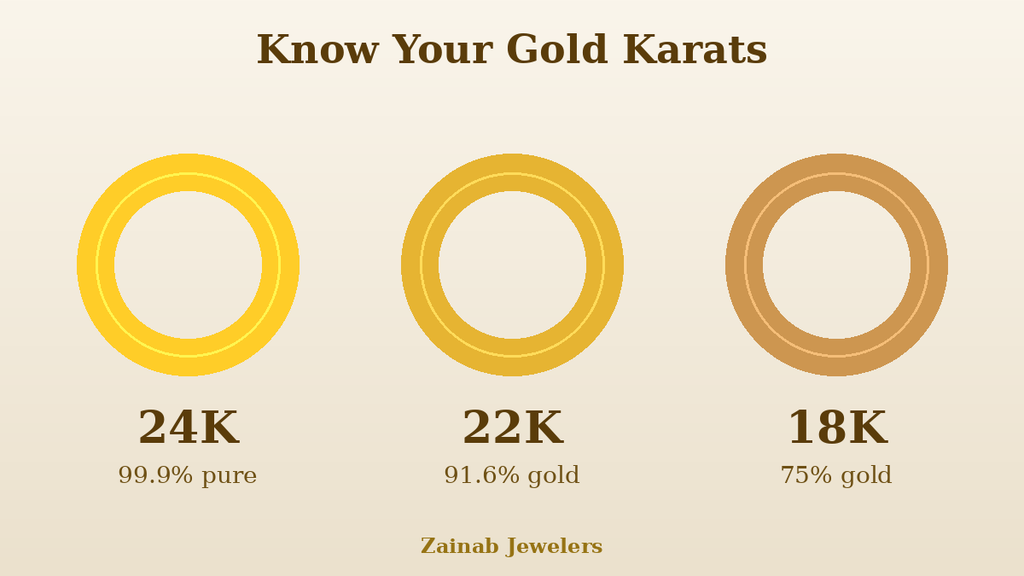
24K Gold
24-karat gold is approximately 99.9% pure gold. It has a rich yellow appearance but is relatively soft, which can make it less suitable for jewellery that experiences frequent wear.
It is commonly associated with gold bars and certain investment products.
22K Gold
22-karat gold contains approximately 91.7% pure gold. It is a popular choice for traditional gold jewellery in Pakistan and other South Asian markets.
Many buyers appreciate its rich golden colour for necklaces, bangles, earrings, and bridal jewellery.
21K Gold
21-karat gold contains approximately 87.5% pure gold. It can be an option for customers looking for high-purity jewellery, depending on local availability and their design preferences.
18K Gold
18-karat gold contains 75% pure gold, with the remaining portion consisting of other metals. It is commonly used in contemporary jewellery and designs that require particular structural properties.
Important tip: Always confirm the stated gold purity of the specific jewellery item you intend to purchase. Never assume that all gold jewellery has the same karat rating.
2. Check the Hallmark or Available Purity Verification
A hallmark or recognised purity mark can help identify the gold content of a jewellery item where an applicable hallmarking system is used.
However, markings and verification practices vary by country and market. A stamp alone should not be treated as conclusive proof of authenticity.
When purchasing gold jewellery, consider asking the jeweller about:
- The stated karat rating of the item.
- Any available hallmark or purity documentation.
- Whether independent purity testing is available.
- The details recorded on the purchase receipt.
If you are uncertain about a jewellery item’s purity, ask a qualified professional about appropriate verification methods.
Being comfortable asking questions is an important part of making an informed purchase.
3. Understand the Importance of Gold Weight
Gold weight is another major factor that influences jewellery prices.
In Pakistan, gold is commonly discussed in grams and tolas. One tola is approximately 11.664 grams.
When comparing two jewellery pieces, check their stated weights and understand what those figures represent.
For example, a necklace containing gemstones or other decorative materials may have a total weight that differs from its actual gold weight.
Ask the jeweller to clarify the gold weight and any other relevant material weights where applicable.
Remember that a heavier piece is not automatically better. Design, craftsmanship, comfort, purity, and suitability for your intended use are also important considerations.
4. Examine the Craftsmanship and Finishing
Beautiful gold jewellery combines attractive design with careful construction.
Before buying a piece, take a moment to examine its visible details.

Surface Finish
Look for an even, consistent finish that suits the intended design. Check for visible defects, rough edges, or areas that appear poorly finished.
Clasps and Fastenings
For necklaces and bracelets, check that clasps operate properly and feel secure. Delicate chains should be handled carefully to avoid unnecessary strain.
Stone Settings
If the jewellery contains gemstones, examin